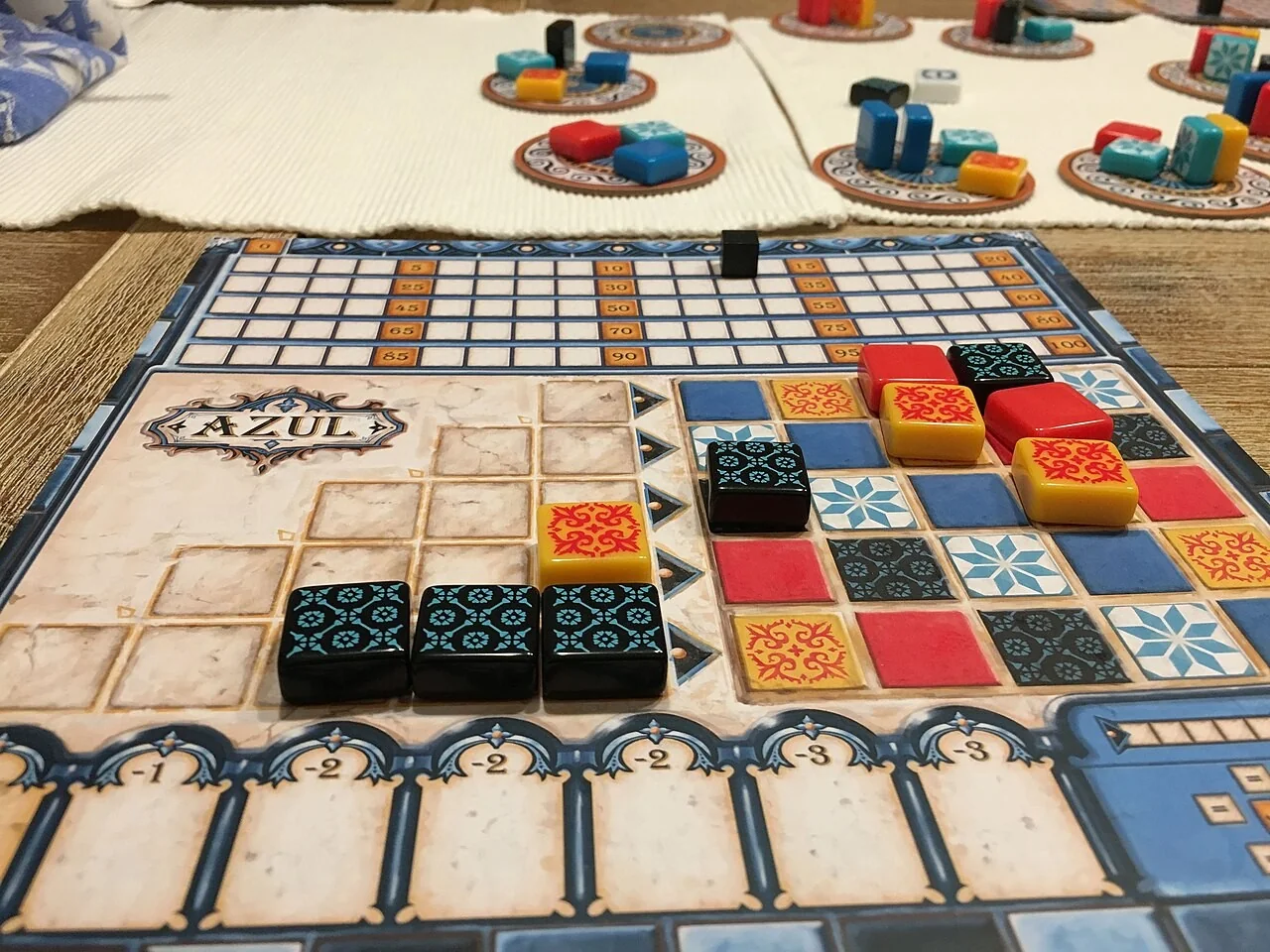
Explaining a game can become an attempt to prevent every possible question before anyone plays. The result is a long description with no clear picture of what a player will actually do. A shorter explanation works only when it remains fair: a deferred rule must return before someone makes a choice it could change. The tiny paper game below is an original invented example for examining teaching order, not a published game, a tested teaching method or an adaptation of a commercial rulebook. Use drawing materials appropriate to the participants and follow their instructions. No purchase or loose counters are needed. For an actual boxed game, use its own rules and any official introductory procedure rather than substituting this demonstration.
Put the goal beside a visible choice
Call the invented game Six Marks. Each of two players has a row of six spaces on their own sheet. The first two spaces already contain circles. On each turn, a player draws either a circle or a square in their next empty space. They take turns until both rows are full; each player therefore makes four choices. Shapes are simply different visible marks, not a speed or drawing-quality challenge.
At the end, each change from one shape to the next earns one point. Three identical shapes in a consecutive group earn two points. Count a long identical run in non-overlapping groups of three: six identical shapes earn four points, while four or five identical shapes earn two. Add both kinds of points. The higher total wins; an equal total is a shared result. Those are the complete scoring rules, including the long-run detail that will be introduced below.
The opening teaching script can begin with the actual third space: “We are making a row of six marks. You already have two circles. Your next mark can continue the circles or change to a square. We will score the finished rows, and a higher score wins.” The player can now see what the explanation is about.
Explain what changes before asking for a choice
Continue: “A change between neighboring shapes earns one point. A group of three identical neighbors earns two. A circle now makes your first group of three; a square now makes a change. Later choices will matter too. Before we start, I will show how longer groups count.”
That wording leaves the actual choice open. It does not say that an immediate two points must be better than one, because the row still has spaces left. Nor does it announce a correct strategy. The teaching task is to make both actions intelligible, not to choose for the new player.
On a separate example row, draw circle-circle-circle-square-circle-square. Its three changes earn three points; its group of three circles earns two more, for five. Count the boundaries by pointing between the marks, then point to the three-circle group separately. Nothing has been scored twice under the same category.
Return to the deferred detail before it matters
The long-run rule should not appear as a surprise during final scoring. Before either player draws their third mark, show circle-circle-circle-circle-circle-circle on the example sheet. Explain that its six circles contain two non-overlapping groups of three, earning four points, and no changes. Four or five consecutive circles would contain just one complete group of three.
This is the deferred detail: it was postponed until players could see what a run meant, not withheld until after a decision. Now ask, “How would you count five circles followed by one square?” There is one complete group of three for two points and one change for one, totaling three. If the explanation is unclear, use another example before starting the actual rows.
Walk one turn without taking it over
Suppose the first player chooses a square after the two starting circles. The teacher can say, “You made a change here. Your row is not finished, so we will leave the total until the end.” The other player chooses a circle and can point to the new group of three. They have made different choices without anyone needing a lecture about every possible remaining row.
If someone wants to restart after the examples, agree whether both rows are practice or both count before continuing. Do not silently allow one player a rehearsal while treating the other's early choices as final. Likewise, do not invent an extra scoring bonus midway through the game to make an outcome more interesting.
Buy for the teaching situation you actually have
When considering a commercial game, inspect its official rules or teaching material before assuming that a small box means a brief explanation. Check the stated player and age information, required reading and whether the maker offers an introductory mode. A demonstration video can help you inspect the sequence, but it does not establish how a particular group will respond.
The useful purchase question is whether the game gives your group a first choice they can understand and a rule set you can explain accurately. More components or a larger expansion will not repair an explanation that hides the consequence of a move.
Sources & further reading
Published sources for the details and examples discussed in this story.