A small dining table can host a satisfying game night when the game and the room are chosen together. The useful question is not how many boxes fit on a shelf but how much space the complete game needs while people are playing. Rehearse one representative setup before buying another large box for an already crowded table.
Choose for the people at the table
Agree on the number of players, the time available and the kind of experience people want. Check the exact game's publisher information, rulebook and age guidance rather than assuming a familiar title has the same requirements in every edition. Days of Wonder supplies rulebooks and product details for Ticket to Ride, for example, so the actual components and setup can be reviewed before purchase. A compact-looking box can still contain a broad board and individual areas for each player. Newcomers may prefer a shorter explanation; experienced players may welcome something more involved. Ask rather than treating difficulty as a measure of enthusiasm.
Measure the playing arrangement
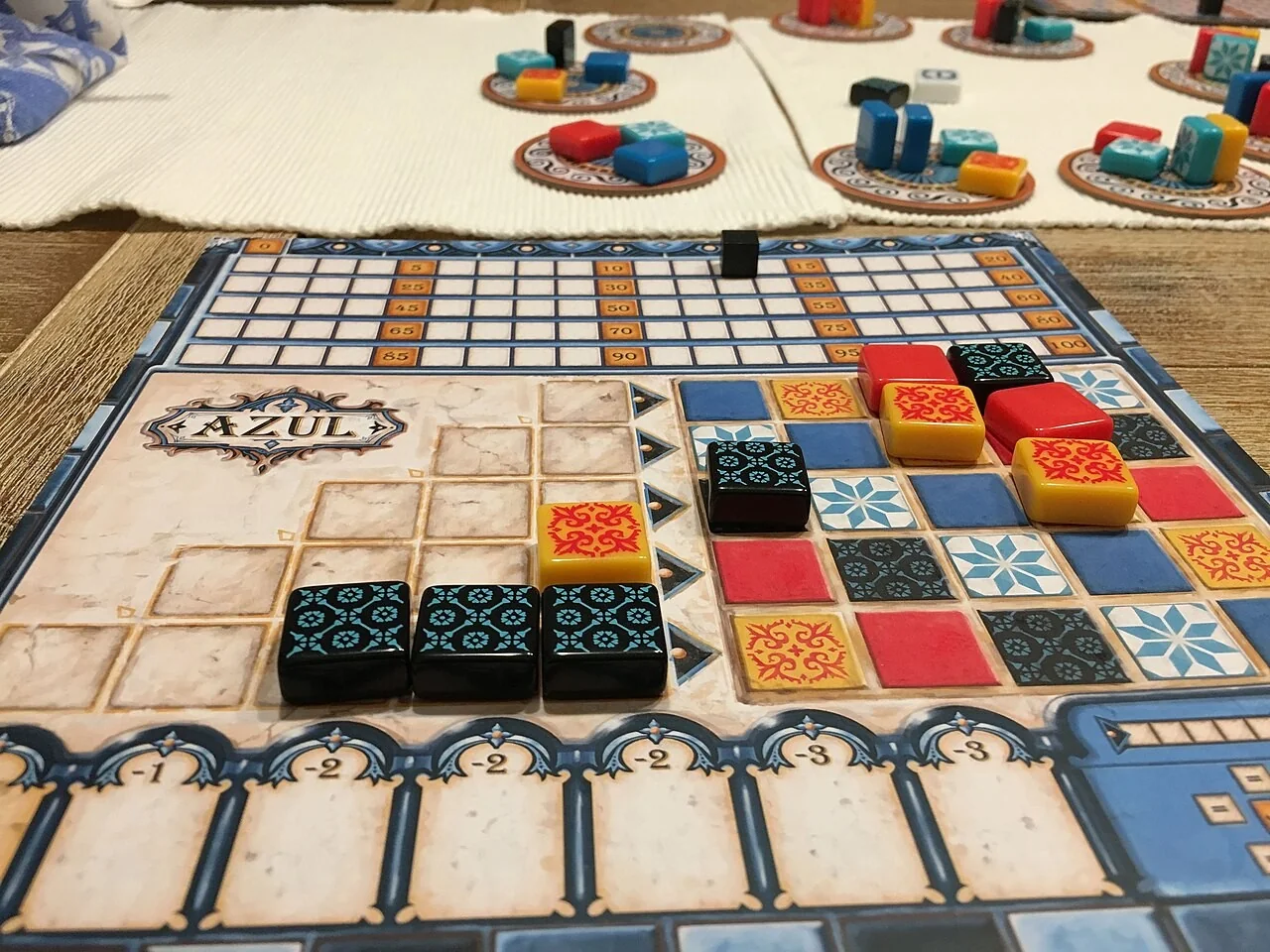
Lay out the board or a paper outline and include card rows, individual pieces and any shared supply. Add the room each person needs to see and reach the relevant areas. Do not count the entire tabletop as usable if a lamp or serving dish will remain there. Keep drinks and refreshments on an appropriate separate surface where possible. A side table borrowed from another room may solve the practical problem without a specialist gaming accessory. Check walking and chair clearance too. A game that technically fits can still be uncomfortable when players cannot move around the furniture.
Make teaching part of the evening
Read the rules beforehand and decide who will explain the first round. Use the publisher's current instructions rather than relying on a vague memory from a different edition. Allow enough time for setup and a practice example if needed. Keep the rulebook accessible without spreading every reference sheet across the central board. A small game organizer can be helpful after you know what slows the setup; it is less useful when it merely repackages components you have not yet learned to use. Let people ask questions without making the first mistake feel like an interruption to the occasion.
Buy for the complete cycle
Consider how components will be counted, stored and retrieved afterward, especially where small pieces need appropriate handling around children or pets. Follow product age and safety guidance. Check whether an expansion requires the base game and whether it increases the table area or player requirements before ordering. A collection can remain small if each game serves a distinct kind of evening. After playing, note whether the difficulty was the game, the setup or the furniture arrangement. Choose the next purchase from that observation rather than assuming a bigger table or a more expensive box is the only way to improve the night.
Sources & further reading
Published sources for the details and examples discussed in this story.