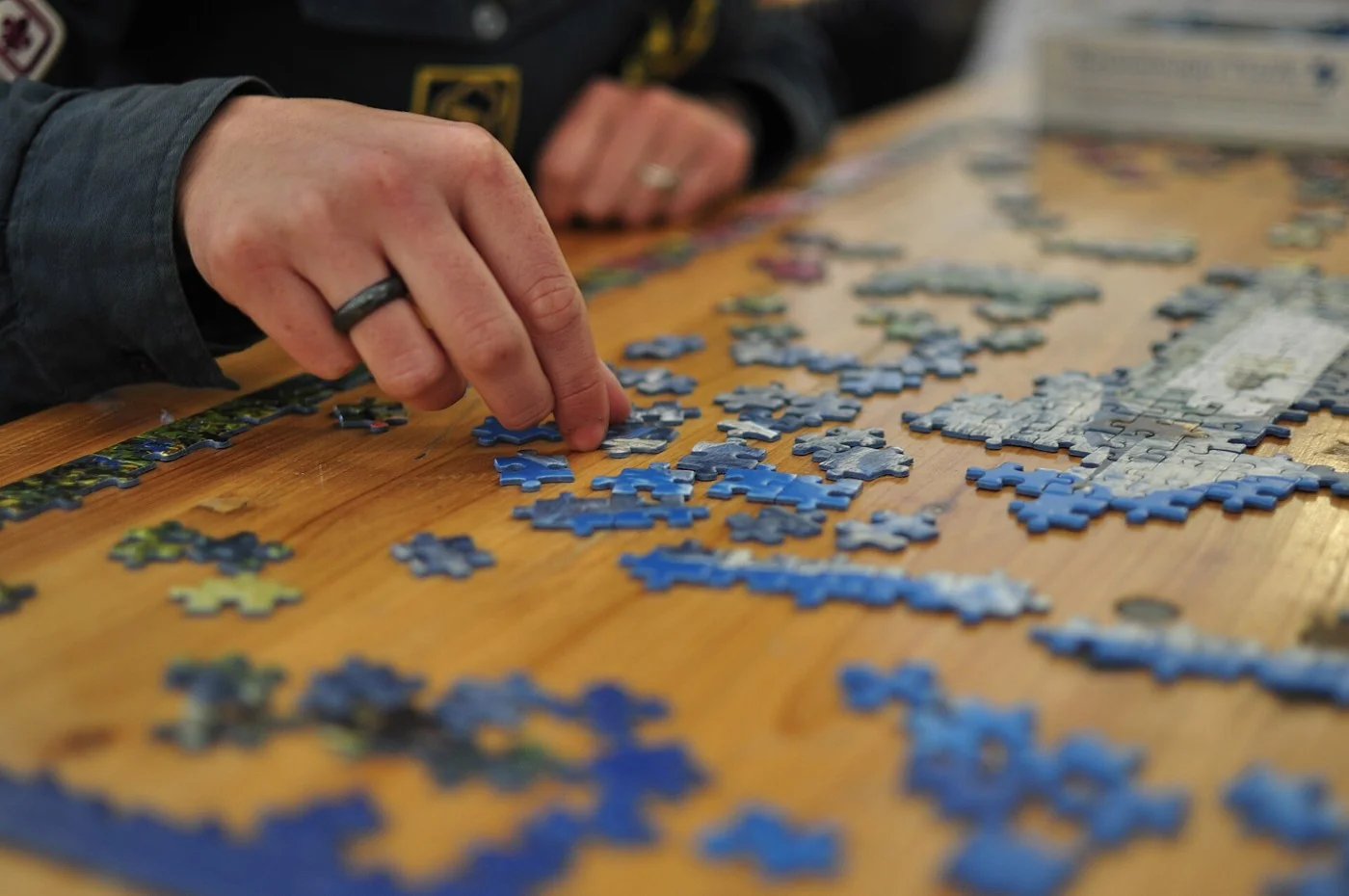
A puzzle can be a pleasant ongoing project until it occupies the only dining table for a week. The solution begins with knowing how large the work will become and where it can rest between sessions. Before buying a puzzle board, roller or extra table, compare the full finished size with the actual room and a realistic storage route.
Look at the finished dimensions
Check the publisher's information for the exact puzzle, not only the piece count. Different shapes and editions can need different areas. Make a paper outline of the finished image and allow additional space for sorting pieces. Include the place where the box image or other reference will sit. A dining table that accepts the completed puzzle may not accommodate several people working around loose pieces. Decide whether this is a solo project or shared activity before choosing the work surface. Avoid buying a larger puzzle merely because its box is only slightly larger on the shelf.
Compare a board with a roll-up system
A rigid board can provide a defined surface that moves as a unit, but it needs somewhere flat and suitable to go. A roll-up system may store more compactly while introducing a different handling method. Read the product's instructions and limitations rather than assuming every partly assembled puzzle will behave identically. Check the usable area and how the system passes through doors. Consider its loaded weight and whether you can move it appropriately. A product described as portable still needs a route and a destination. Borrowing a suitable surface or testing an existing board can help establish what the room requires before a purchase.
Keep sorting proportionate
Small trays can separate colors or edge pieces, but every extra tray needs space when the table is cleared. Reuse appropriate shallow containers first and see which groups you actually consult. Do not turn a relaxing activity into a complicated filing system unless that process is part of the pleasure for you. Keep components handled appropriately around children and pets, following product age and safety guidance. Put the box or reference where it remains visible without blocking a working area. If a sorting arrangement makes the reset slower than the puzzle session itself, simplify it before adding another organizer.
Choose a stopping routine
At the end of a session, count the loose containers, put the reference away and move the work according to the storage system's instructions. Keep the intended location clear rather than finding a new temporary spot every evening. Before buying another puzzle, decide whether to finish, pause or pass on the current one. Follow the publisher's guidance for any preserving product rather than improvising a permanent treatment you may regret. A small collection with a usable surface and an easy reset can provide more regular enjoyment than a pile of large boxes waiting for a table that never becomes free.
Sources & further reading
Published sources for the details and examples discussed in this story.