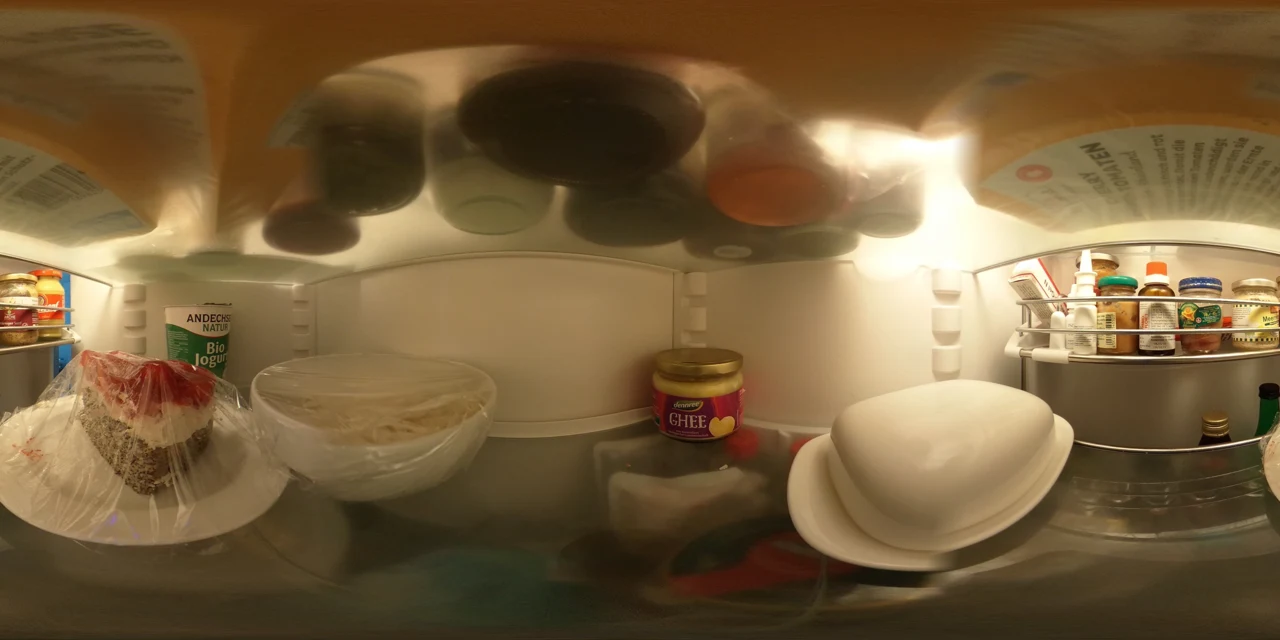
Two adults can agree to share groceries and still disagree about the cheese intended for tomorrow's dinner. The carton being visible does not resolve permission. In this fictional kitchen, Mara and Ellis use one existing refrigerator shelf to distinguish three food-use agreements. Their labels describe who may use something; they leave its original packaging and food-safety requirements intact.
Shared means available under an actual agreement
Mara and Ellis agree that their unopened milk and their plain yogurt are shared ingredients. They attach a small removable shelf-edge card reading “Shared ingredients: milk and plain yogurt. Tell the other person when you finish one.” It names the agreement rather than marking every visible item “help yourself.”
The milk and yogurt remain in their original containers, with maker information, dates and any allergen information visible. The shelf-edge card is not a replacement package label. A new item placed beside them does not become shared automatically; its owner needs to identify whether it belongs to the agreement.
One evening Ellis uses the last yogurt. The closing message is specific: “The shared yogurt is finished; I have added it to our agreed shopping note.” That does not claim Mara must immediately replace it or that Ellis has already bought more. The point is to make the supply state known rather than leave an empty container as a surprise.
Reserved names a meal, not an indefinite ownership claim
An unopened cheese package is intended for Mara's planned Tuesday dinner. The pair put a separate shelf-edge card next to it: “Reserved for Tuesday dinner—ask Mara before using.” Its location and original wrapper remain ordinary; the difference is the explicit permission rule.
Ellis wants some cheese for lunch. A useful question is “Can I use this package, or does Tuesday's dinner still need it?” If Mara agrees to release it, they change the card and separately decide what the dinner now needs. Silence is not the release, and the meal reservation is not a guarantee that the food will remain suitable until Tuesday.
If the meal is cancelled, Mara says so and removes the reservation only after agreeing what happens next. They might make it shared, keep it for a different named meal or leave it individually owned. The card should follow the actual decision instead of lingering as a permanent veto nobody remembers making.
Ask first remains a complete third category
Ellis has bought a sealed snack for a visitor. It has not been included in the shared agreement and is not part of Mara's dinner. A card reading “Ellis—ask before using” supplies the missing instruction without requiring a long explanation of the visit.
Mara can ask and receive either answer. If Ellis is unavailable, the label has already stated the default. This prevents “I thought everything on this shelf was shared” from becoming a rule invented after the food has been taken. It also avoids assuming that a promised replacement makes permission unnecessary.
The three arrangements can coexist on one shelf because they concern different uses, not different levels of affection or generosity. Buying three matching bins would not create those agreements. They start with names and a conversation, using the existing packaging rather than decanting everything for a coordinated appearance.
Keep permission separate from safe storage
FoodSafety.gov's cold-storage chart specifies refrigeration at 40°F or below. A household ownership card cannot establish that this condition has been met, replace a food-specific storage limit or extend a package date. This imaginary shelf is not a storage inspection or a claim that all foods can be arranged in one way.
Before using a food, the adults still follow the actual item's relevant handling and storage requirements. They do not cover those instructions with a decorative label. If information is missing or suitability is uncertain, “shared” does not supply the answer.
Their short review is therefore a conversation about permission: What is shared? What remains reserved? Which item needs an explicit handoff? The practical benefit is a dinner ingredient remaining available by agreement, with an honest route for changing that agreement when plans change.
Sources & further reading
Published sources for the details and examples discussed in this story.