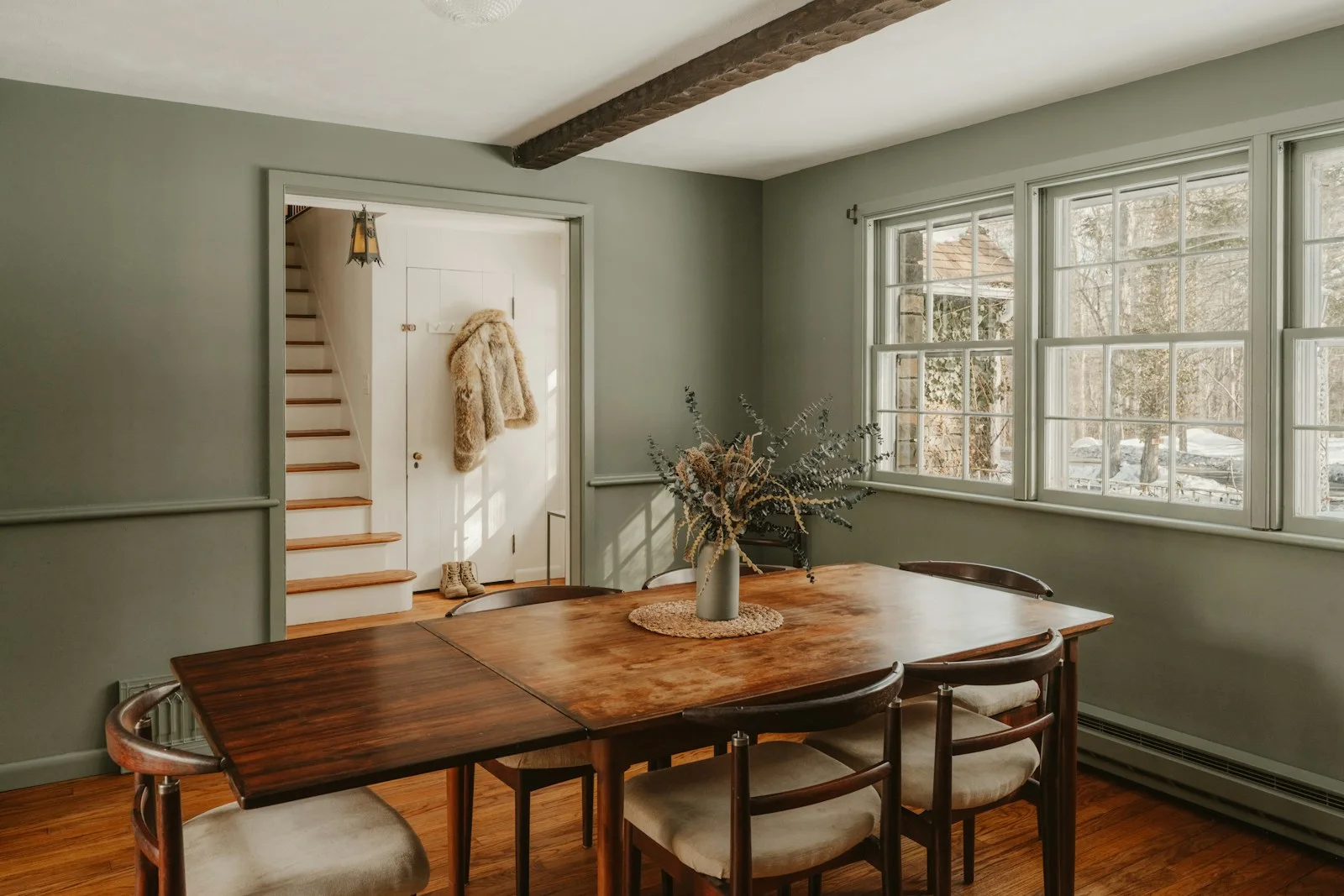
A dining table in a small home rarely does just one job. Breakfast becomes a laptop session, homework makes way for dinner and extra guests arrive on a weekend. The right table balances those ordinary uses with the space you need to move around it. This guide compares table formats using practical planning questions and IKEA’s published buying guidance, without claiming hands-on testing of particular furniture.
| Format | Useful when | Check before buying |
|---|---|---|
| Fixed | The regular household fits without moving the table | Everyday chair and walkway clearance |
| Extendable | You host occasionally and can use the longer setting | Leaf storage and extended footprint |
| Drop-leaf | The room needs a compact folded arrangement | Support-leg position and usable seating |
Measure the room in use, not just the empty floor
Mark out a proposed table with tape, then place the actual chairs around it. Pull one out, sit down and ask someone else to walk past. Include nearby cupboard doors, radiators and the route through the room. A table that technically fits can still make daily life awkward.
IKEA’s guidance emphasizes seating needs, room shape and clear space behind the table. Treat the retailer’s dimensions as starting points to test against your own room and users. Accessibility needs, chair design and the way a family moves through the space can require more room than a basic diagram suggests.
A fixed table is simplest when the everyday fit is right
A fixed table avoids an extension mechanism and extra leaves to store. It is a sensible option when the regular household fits comfortably and occasional guests can be accommodated another way. Compare the leg arrangement as carefully as the top: a broad pedestal or closely spaced legs may change where chairs can go.
The trade-off is inflexibility. Buying a larger fixed table for a few holiday meals can consume the walkway every other day. Before choosing it, imagine the room during a normal school or work morning, with bags and people moving through it.
An extendable table needs a realistic setup routine
An extendable top can keep the everyday footprint modest while offering more space when needed. Check how the leaves are stored, whether one person can operate the mechanism according to its instructions and whether the extended table still leaves usable circulation around the room.
Ask to see the extension process in a store or look for a clear manufacturer demonstration. Measure the extended length as well as the closed size. If spare leaves must live under a bed or in a cupboard, include that storage burden in the decision rather than treating it as free flexibility.
Drop-leaf designs trade compactness for a different seating layout
A drop-leaf table can work where the room needs to change character during the day. It is worth considering for one or two regular diners who sometimes need a wider top, or for a table that doubles as a work surface. Check the folded profile and where the support legs move when opened.
Sit at the precise chair positions you expect to use. Hinges and supports can affect knee room, and a folded section may not offer the same comfortable seat as the open top. Follow the manufacturer’s instructions and keep fingers clear of moving parts when changing the table’s configuration.
Choose a surface that fits the household’s care routine
Compare the care instructions for the exact finish instead of assuming all wood, veneer or laminate behaves alike. Consider placemats, craft activities, spill cleanup and the products the manufacturer permits. Ask what routine maintenance is needed and what repairs, if any, are practical.
Finally, compare the full purchase: delivery access, assembly, chairs, floor protection and return conditions. A table that looks economical can become costly when it needs different chairs or specialist delivery. Choose the format that makes ordinary meals and transitions easier; the occasional gathering should be possible without making every other day less comfortable.
Useful places to look
Sources & further reading
Published sources for the details and examples discussed in this story.