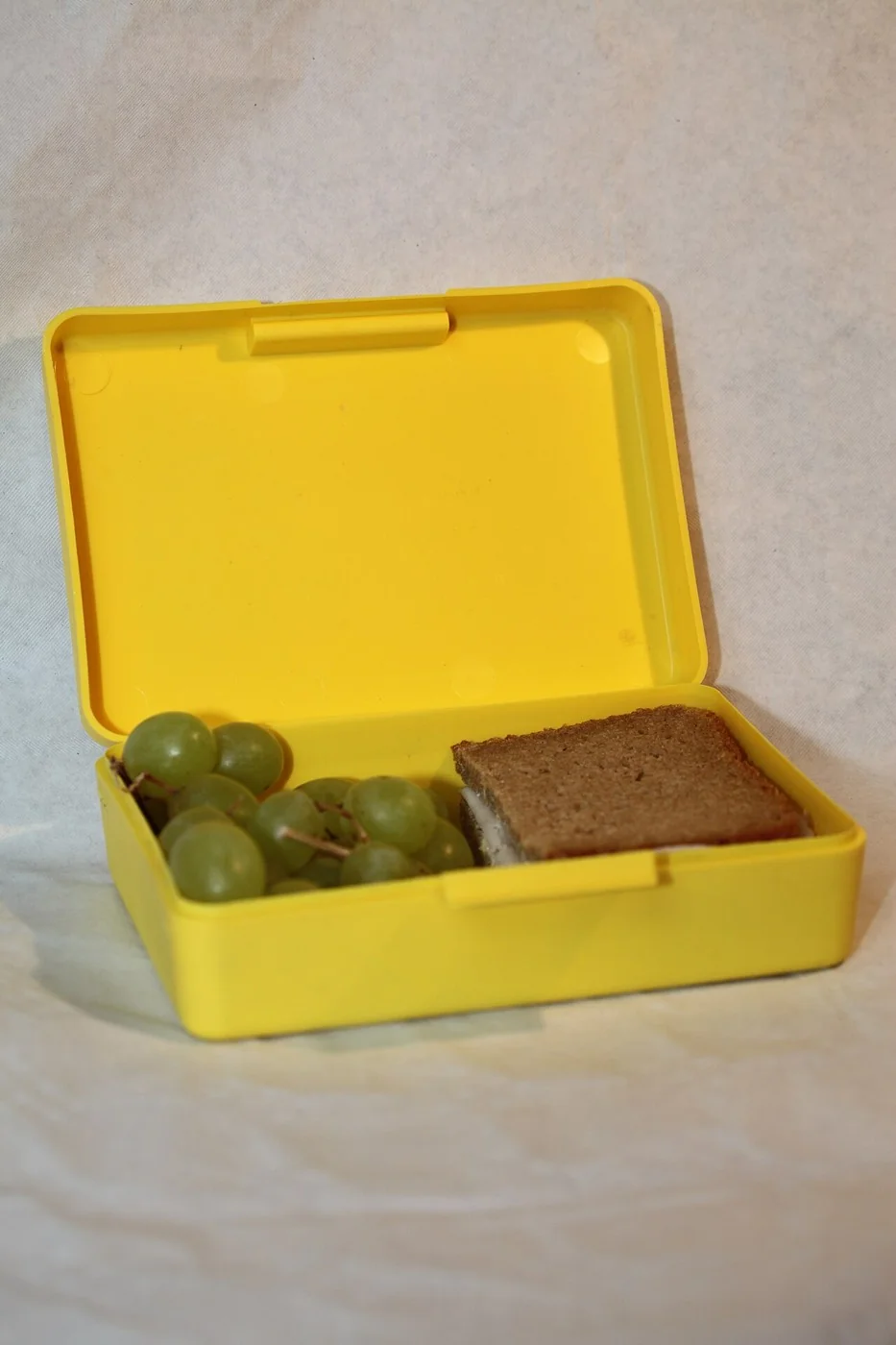
A lunch-container set often looks convincing when every piece is stacked neatly in an empty cupboard. The real test is the food you pack on a workday or school morning. Start with those meals and their handling needs, then choose a small collection of containers that can be carried, opened, cleaned and stored in your household's ordinary routine.
| Shape | Meal-planning question | Storage question |
|---|---|---|
| Divided box | Do the meal components need fixed separation? | Can every component dry and store appropriately? |
| Bowl or rounded container | Does this suit the food you actually pack? | Will the lid fit the intended cupboard space? |
| Rectangular container | Does the complete container fit the lunch bag? | Does nesting remain useful with lids included? |
Draw a normal lunch before counting containers
List several meals you actually pack and identify the portions that need separation. A sandwich, a salad and leftovers may call for different shapes. Consider whether sauces or dressings belong in a separate suitable container and whether delicate food will be crushed beneath something heavier. The largest possible capacity is not automatically useful. Make a rough packing layout with existing containers and the actual lunch bag. The aim is to fit an ordinary meal with enough flexibility for variation, not to fill every compartment in a large set because it arrived as one coordinated package.
Read the complete use-and-care directions
Check the instructions for the exact bases, lids, seals and accessories. Rubbermaid's Brilliance guidance, for example, is specific to that product line and includes directions for use and care. Do not transfer a microwave or cleaning assumption from one set to another because the plastics look similar. Confirm what must be opened, removed or handled differently when following the permitted use. Consider food-temperature requirements separately from the container's appearance and use current appropriate food-safety guidance. A sturdy-looking box or a positive review does not certify every meal for every journey. Choose a system whose instructions are clear enough to follow during a busy morning.
Compare the lid with the person using it
Where a shop permits, inspect how the closure opens and how many separate pieces must be managed. A lid can be secure yet awkward for the intended user. For a child, choose an age-appropriate product and practice using it under suitable supervision before relying on it away from home. Check the meal's carrying arrangement without treating a generic leak-resistant claim as a guarantee. Keep electronics and items needing protection appropriately separate. If a replacement lid or seal matters to the purchase, establish availability with the maker instead of assuming it from the brand name.
Store the actual set, not the photograph
Measure the cupboard space with lids included and decide whether containers will nest, stack or remain assembled as the maker permits. A large set may contain several sizes you rarely need, while a few individual pieces can fit the routine more precisely. Keep the cleaning and drying process in view; many components require somewhere to go between use and storage. Review how often lunches are packed and how frequently washing occurs before choosing quantities. Replacing one useful size may be enough. The right collection makes packing and putting away easier without turning every cupboard search into a matching game between unrelated lids.
Sources & further reading
Published sources for the details and examples discussed in this story.