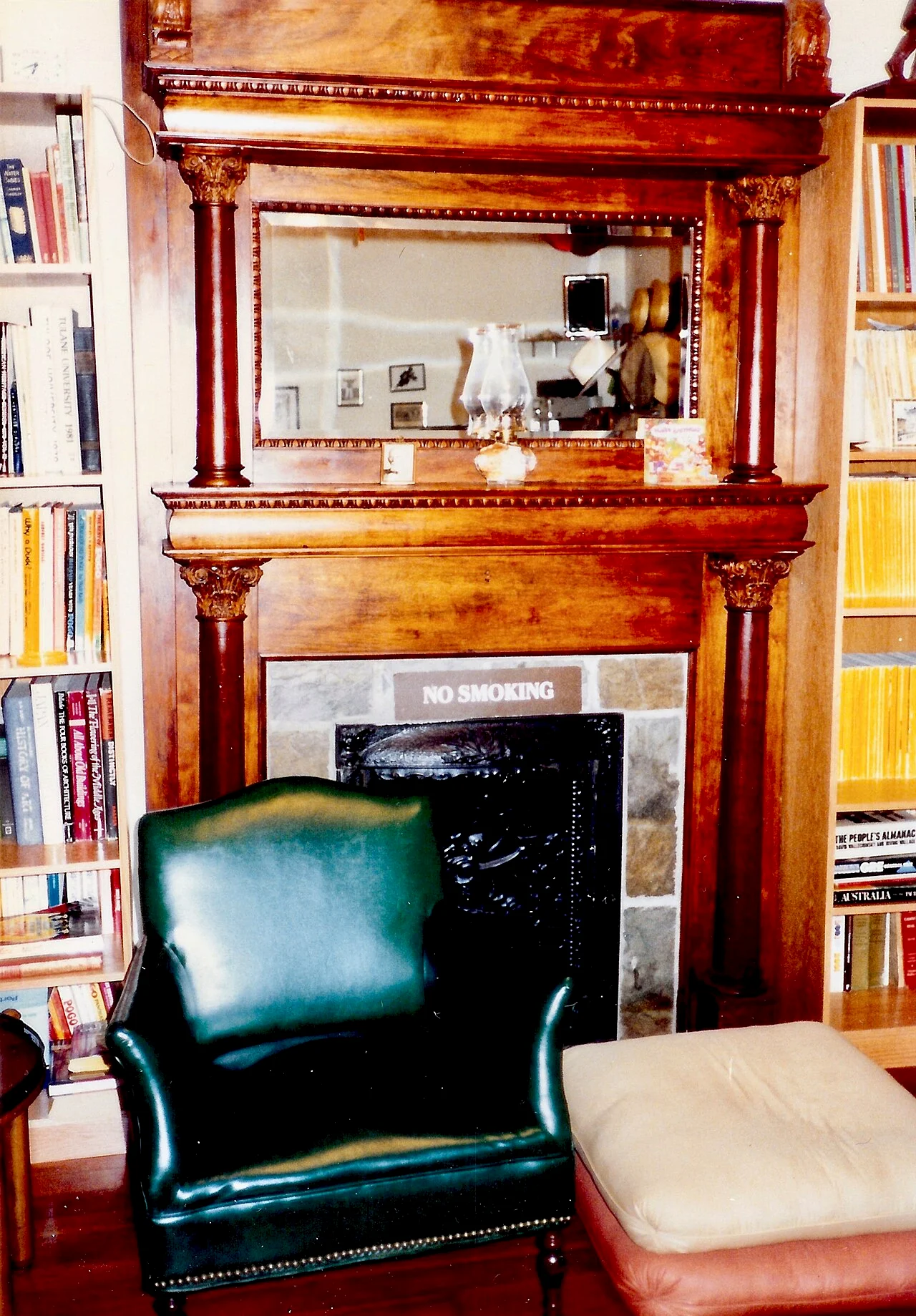
A long object set to one side of a mantel creates an unequal beginning. Giving the other side more height might seem the obvious answer, but height is only one part of the comparison. A shorter, darker object can make a stronger interruption than a taller pale one. The question is which relationship lets the long shape remain the reason for the arrangement. Getty's Principles of Design discusses balance through the visual weight of objects, colors, texture and space, and distinguishes asymmetry from matching sides. The two studies below apply that vocabulary to invented objects. Visual weight here means an impression in a composition, not physical weight, load capacity or stability.
Hold the long shape and its offset constant
Imagine a long, low, pale decorative tray with a plain surface and a clearly visible horizontal edge. It sits to the left of center on an existing suitable display area. The surrounding wall is pale too, so the tray reads through its outline and shallow shadow rather than a large dark patch.
Both imagined arrangements keep that tray in the same position and leave a substantial open interval to its right. Neither begins with a row of objects that needs to be reduced. The comparison is between two possible upright companions beyond that interval, not between a crowded shelf and an edited one.
Assume the location and the objects are suitable for this fictional display. These visual studies provide no guidance for operating a fireplace, placing objects near heat, mounting a mantel or determining its safe load.
First study: a taller pale upright carries the line upward
In the first version, the companion is a slender pale upright form toward the right side. It is noticeably taller than the tray but narrow and close in tone to the wall. Its outline supplies height without making a dense dark area at the opposite end.
I would read this version as a long low beginning on the left and a lighter upward finish on the right. The open interval lets the two directions remain distinct. The taller object need not look equally substantial to the tray, and the tray's offset can stay evident rather than appearing corrected.
This could suit an owner who wants the mantel to retain a left-led composition. If the upright becomes so pale that it disappears from the ordinary viewing position, more height alone may not give it the presence the owner wanted. That is a question about the actual view, not proof that a universal height ratio has been missed.
Second study: a shorter dark form becomes a firmer endpoint
Now replace that possible companion in the imagined comparison with a shorter upright form that is broader and dark against the same wall. Keep the tray and the open interval unchanged. Although the new companion has less height, its concentrated contrast can make it a much more definite stop on the right.
The eye may now move along the tray's low edge, cross the interval and come to rest at the dark form. The arrangement can read as two unequal but more assertive ends rather than a horizontal beginning followed by a light upward gesture. The difference comes from breadth and contrast as well as height.
If the dark form becomes the first thing noticed and the tray seems incidental, it has answered too strongly for this intended composition. An owner might prefer the first study, or compare a less contrasting suitable companion. Buying an even taller version of the dark object would not necessarily restore the long tray's lead.
Choose the kind of asymmetry you want
The first study leaves the tray visibly dominant and lets the opposite height act more lightly. The second gives the right side a firmer presence without matching the tray's dimensions. Both retain an off-center main object; neither needs identical partners at the ends to explain the decision.
Before shopping, compare suitable existing objects from the place where the display is normally seen. Ask whether you want an upward continuation or a definite opposing endpoint. Leave the tray alone if no practical companion produces the relationship you want. An attractive visual idea does not create a requirement to acquire an object that has no suitable place in the actual room.
Sources & further reading
Published sources for the details and examples discussed in this story.