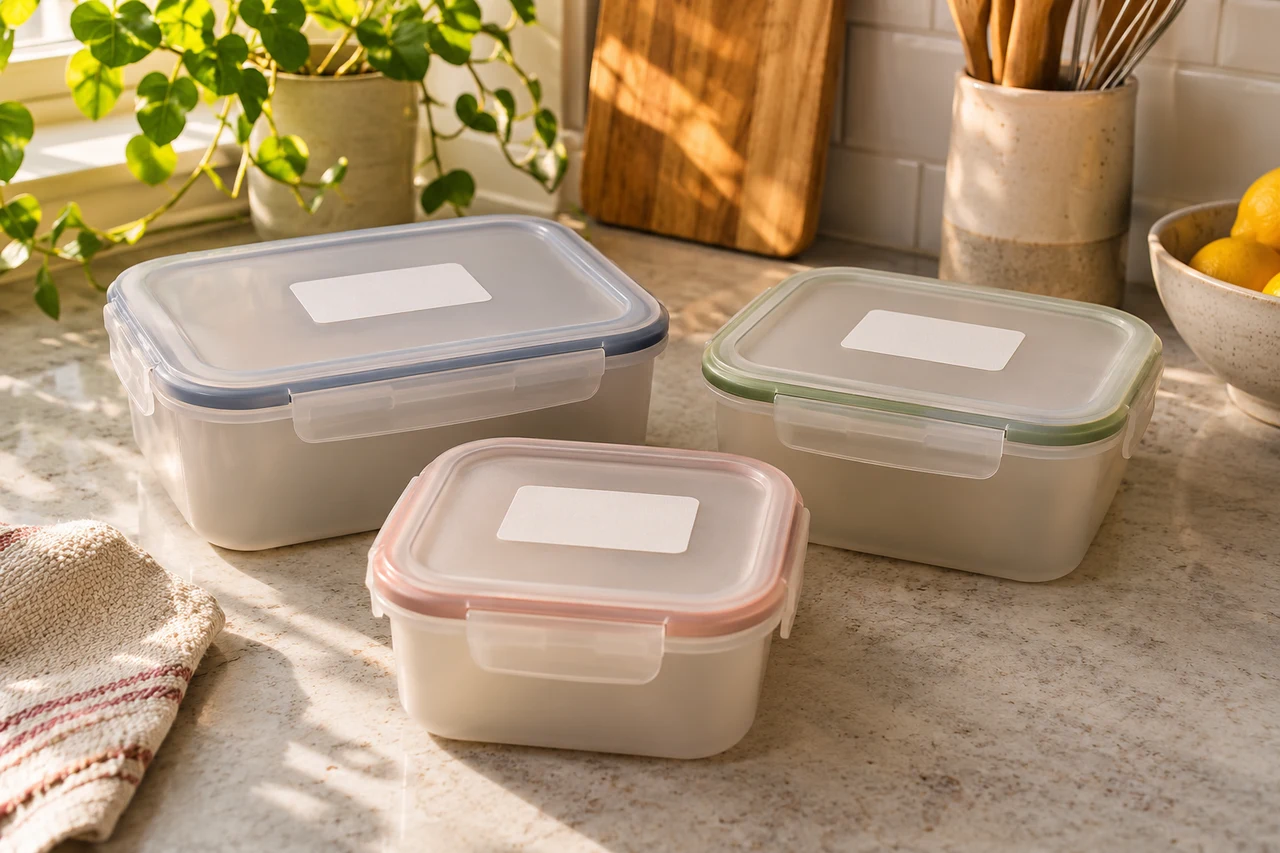
A covered container can be familiar to the person who filled it and mysterious to the person making dinner later. A useful handoff label preserves the meal’s identity, its freezing date and the directions that genuinely apply. The three containers in this article are fictional examples of record keeping. Their labels do not establish that food was handled safely, extend storage limits or supply a universal reheating program.
Identify what went into this container
Imagine a household has prepared a lentil-and-carrot soup from its own written recipe. The first label reads “Lentil-and-carrot soup; two planned side servings; frozen 2 November 2026.” All of those details are assumptions within the example. The portion wording describes the household’s intention, not an individual nutrition recommendation.
Keep the complete ingredient list and relevant instructions with the actual recipe. A short meal name can omit something important, including an allergen or an ingredient added during cooking. The receiving cook should be able to find the real recipe and any changes, rather than be asked to infer the contents from the color of the frozen food.
Keep different meals separately identifiable
A second fictional container holds a tomato-and-bean stew; a third holds plain cooked rice. Each gets its own name and actual freezing date, even if all three are destined for the same dinner. Their separate identities matter when only one is removed or the plan changes. “Dinner ingredients” would not tell the next cook which component is missing.
Retain original commercial packaging directions where relevant, or keep an accurate reference to the actual household recipe. Do not use a decorative label to replace handling instructions with an invented “microwave for three minutes.” Appliance power, quantity and the actual food matter. Missing preparation information needs an answer before the handoff is treated as complete.
Make the label a companion to safe handling
FoodSafety.gov advises putting leftovers into covered shallow containers and refrigerating or freezing them promptly, within two hours of cooking. Its guidance says not to wait for food to reach room temperature before storing it. Those handling steps happen before a future reader sees the label; a neatly written date cannot prove they occurred.
The same source says reheated leftovers should reach 165°F/74°C as measured with a food thermometer. Its microwave advice includes covering, rotating and checking several places, with an appropriate resting period. Follow the actual food and equipment directions rather than deriving a time from the label’s portion description. This handoff note is not a storage inspection or a validated recipe.
Close the handoff with one understandable reference
In the original household arrangement, the cook keeps the soup recipe under its exact name in the agreed kitchen recipe folder. The label points to that real household record once it exists. This is a proposed organization method, not a claim that a downloadable recipe or shared account has been created here. The other cook confirms that the record can be found and understood.
Before buying freezer-label sheets or matching containers, check whether your existing food-suitable containers and appropriate labels can preserve this information legibly without covering important instructions. Use materials and containers according to their actual intended conditions. No freezer life, food-contact suitability or microwave compatibility has been tested by this article; the useful result is a clear information handoff.
Sources & further reading
Published sources for the details and examples discussed in this story.