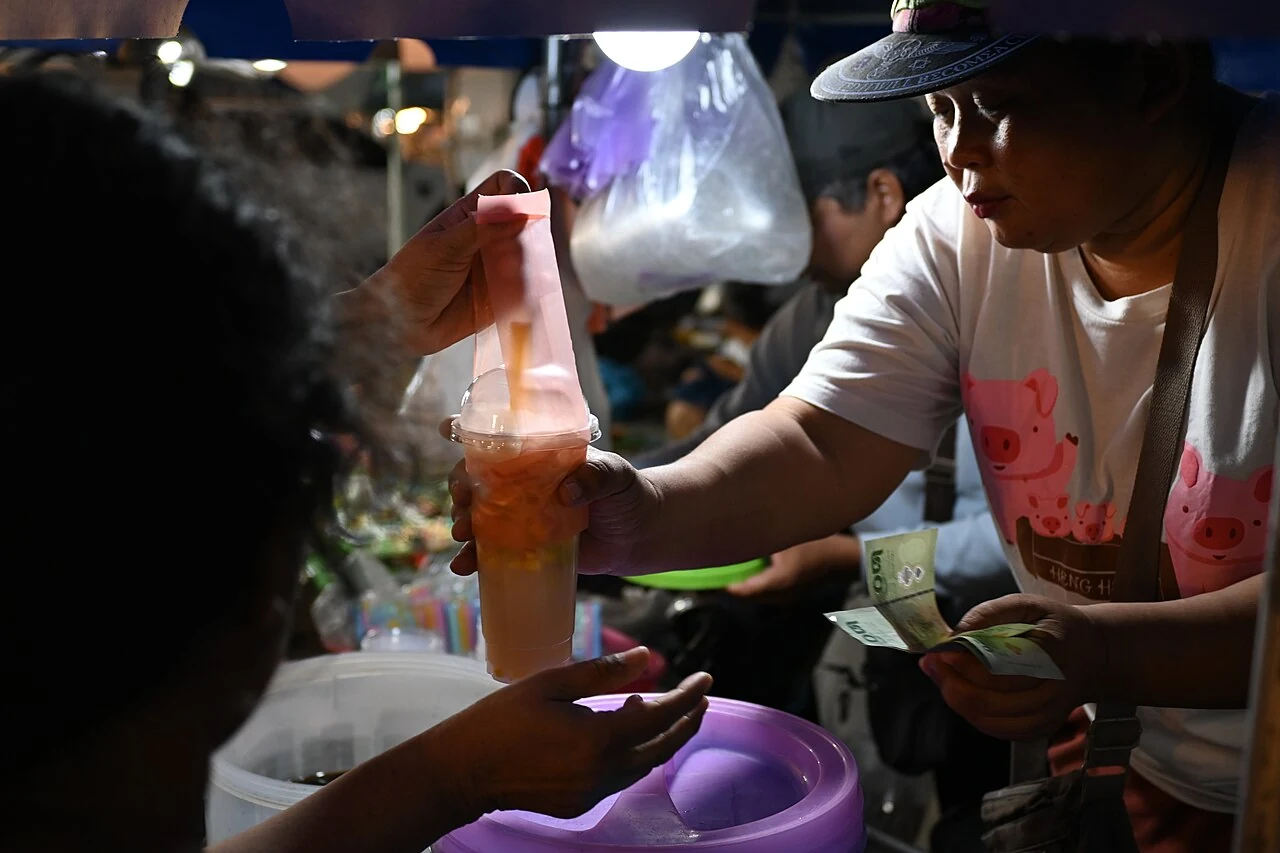
A cash box containing forty dollars can be ready for one transaction and unable to handle another. The total alone does not show whether the stallholder can make the change a customer requests. Before an event, run a small, explicitly hypothetical denomination exercise using the prices and payment conditions actually planned. It is a rehearsal of arithmetic and available notes, not a sales forecast, security plan or recommendation about how much cash a business should carry.
Two forty-dollar floats
Imagine two invented starting arrangements. The first contains twenty one-dollar notes and four five-dollar notes: twenty dollars plus twenty dollars, for a forty-dollar total. The second contains four ten-dollar notes, also totaling forty dollars. The U.S. Currency Education Program lists these note denominations among those issued by the Federal Reserve Board; their availability in a particular bank or cash supply is a separate question.
Now suppose a hypothetical item costs seven dollars and the first customer offers twenty. The change required is thirteen dollars. The first float could supply two fives and three ones. The second has the same total value but cannot produce thirteen dollars using only its four tens. This difference is visible before any real customer appears, without pretending that the invented transaction predicts the day's demand.
Follow the denominations through three sales
Using the first arrangement, accept the hypothetical twenty-dollar payment and return thirteen dollars. The box now contains seventeen ones, two fives and one twenty, totaling forty-seven dollars. The seven-dollar increase is the amount of that invented sale, assuming no other cash movement. Keep the payment received and the change given as separate entries rather than recording only the sale price.
If a second seven-dollar item is paid for with a ten, three ones leave the box and a ten enters. Fourteen ones, two fives, one ten and one twenty total fifty-four dollars. A third identical sale paid with another ten leaves eleven ones, two fives, two tens and one twenty: sixty-one dollars. The arithmetic shows how the denomination mix changes even though the price stays the same.
These are invented transactions, not recommended prices or evidence about typical customer behavior. Repeating them is useful only as a transparent example. Replace them with a few plausible scenarios for the actual stall, then label every assumption. Do not convert a tidy worked exercise into a confident claim that the available change will be sufficient all day.
Test a different payment pattern
Run another scenario in which several early customers offer larger notes, and another in which payments use exact change. Watch which denominations become scarce rather than looking only at the rising total. A cash box can contain more money after several sales while still having less flexibility for the next transaction.
If a scenario becomes impossible, mark the point where it stops. Do not silently assume a neighboring stall, an organizer or a customer will supply change. Ask the actual organizer about payment conditions and any relevant event rules in advance. This article does not determine legal-tender obligations, banking arrangements or whether a particular business may refuse a payment method.
Separate the float from takings
In the three-sale example, sixty-one dollars in the box is not sixty-one dollars of sales. Forty dollars was there at the beginning, and the invented sales added twenty-one. Nor is that twenty-one-dollar difference a calculation of profit: the exercise excludes stock costs, fees and every other relevant business item. Its limited purpose is to track cash movements and denominations clearly.
Use a separate note for any actual cash added, removed or spent during an event. Otherwise the simple comparison between opening and closing totals becomes misleading. The appropriate accounting records and professional advice for a real business remain separate from this rehearsal. A simulation should make those exclusions visible, not conceal them behind a spreadsheet labeled “earnings.”
Choose a practical counting method
A sheet of paper with columns for payment, change and remaining denominations is enough to expose the basic problem. A calculator can help check arithmetic, but a cash-box purchase does not resolve a denomination shortage. If selecting equipment, compare its actual organization and the event's relevant requirements rather than assuming that more compartments create more usable change.
Keep any real cash-handling and security arrangements private and appropriate to the business. There is no need to publish the float, storage location or movement plan with an event announcement. The useful public-facing outcome is a payment arrangement the stall can actually explain; the useful private outcome is a transparent exercise showing where its assumptions need attention.
Sources & further reading
Published sources for the details and examples discussed in this story.